
South Park Charaktere: Eine visuelle Referenz für die Bildkomposition im Storyboard
Plane klarere Storyboard-Bilder mit 12 illustrierten South Park Charakterreferenzen, Hinweisen zur Einstellungsgröße und praktischen Methoden, um die Identität zwischen den Bildern zu bewahren.
Neu auf dieser Seite
- — Artikel veröffentlicht.

A storyboard needs to make the subject readable before it can explain an action. South Park characters offer useful examples because their identities are carried by large, simple features: a hood, an earflap hat, a wide coat, or a distinctive hairstyle. The camera can move closer, but each crop should retain the clues that the viewer needs. For a new character for a storyboard, try South Park Character Creator.
The artwork in this guide comes from the South Park Public Library. We use it to discuss full figures, medium framing, and close portraits. These are observations and proposed storyboard choices; the images are not video frames generated for this article, and the suggestions are not presented as tested sequences.
Match the frame to the information
A full figure explains posture and costume. A medium view emphasizes the face, clothing, and any hand-level action. A close portrait may communicate identity but remove the supporting details. Choose the frame that answers the scene's question instead of using the same crop for every character.
Eric Cartman: allow for body width
Cartman's red coat makes a broad lower shape beneath the turquoise cap. A full-body frame shows that proportion clearly. In a group storyboard, give him enough horizontal space; narrowing the crop to match another boy's cell can make the portrait's most distinctive proportion harder to recognize.
Stan Marsh: protect the top of the hat
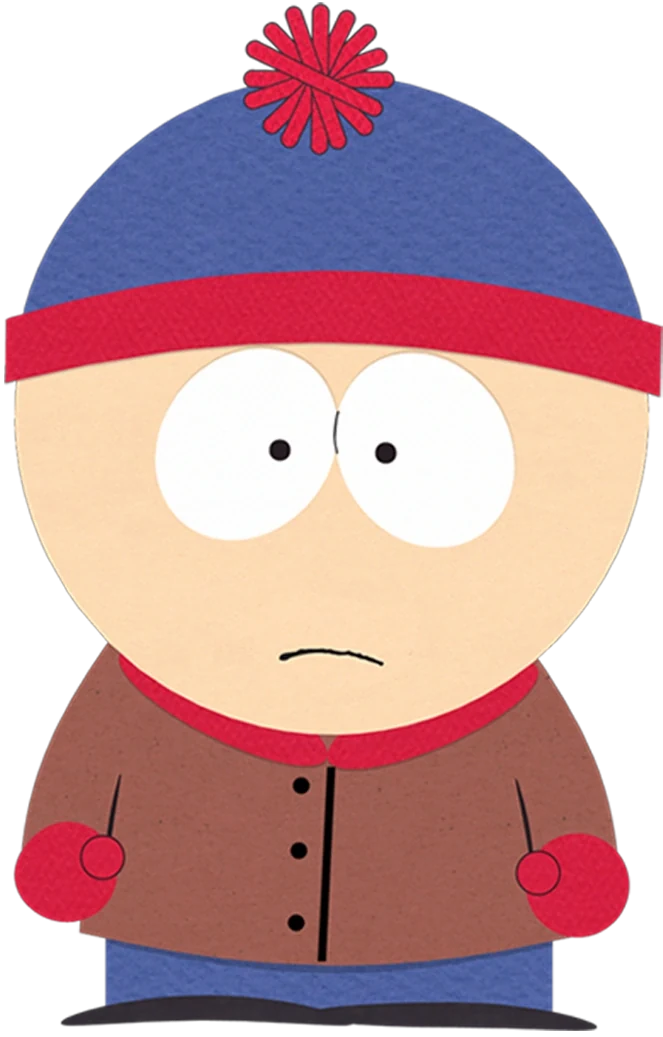
Stan's red pom-pom and hat band sit above a brown jacket. They are useful identity clues in a medium view. A closer frame should leave space above the head, because trimming the pom-pom may remove a more informative detail than the extra coat fabric the crop retains below.
Kyle Broflovski: retain the side outline
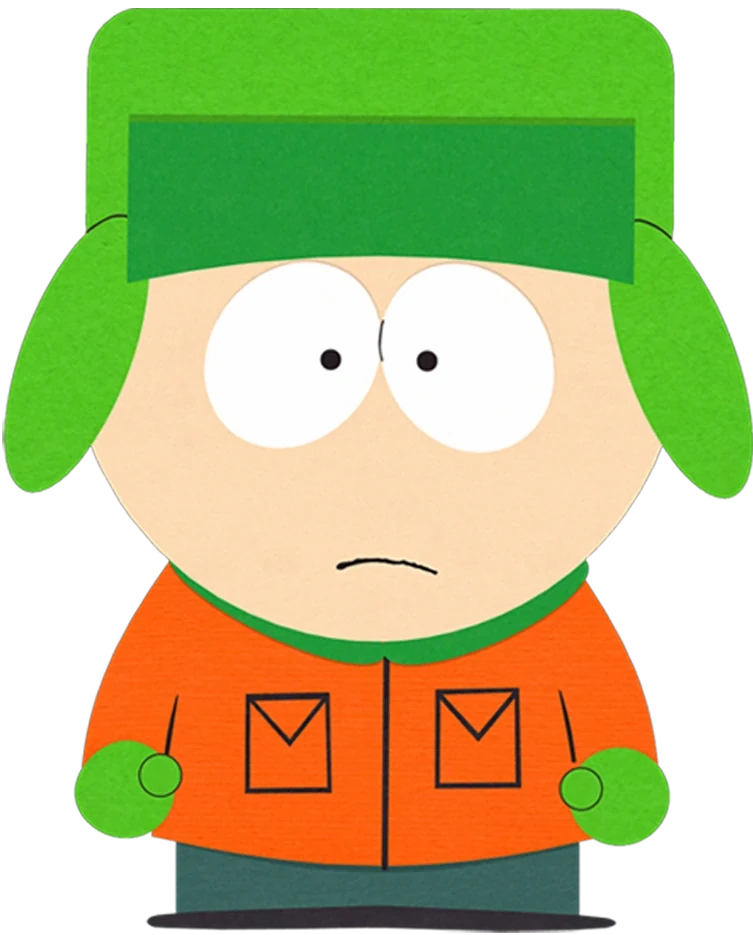
Kyle's green earflaps extend beside his face, while the orange jacket anchors the lower portion. A narrow close-up can lose those side shapes. For a storyboard identification frame, preserve both flaps when possible and use the coat as a secondary clue rather than relying on the eyes alone.
Kenny McCormick: frame the hood opening
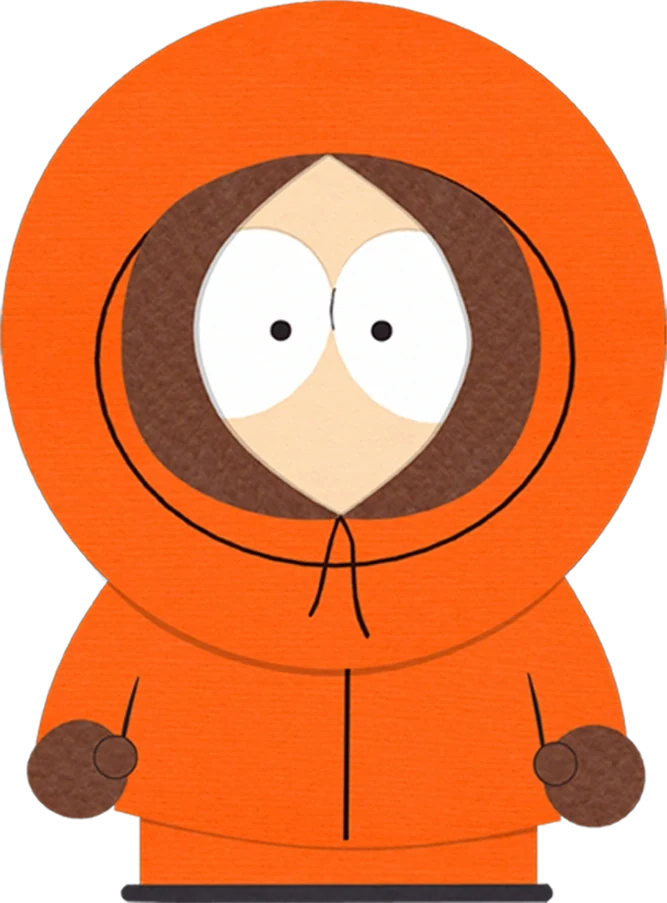
Kenny's eyes sit inside the dark opening of his orange hood. The complete enclosure matters to the portrait. A close frame should show how the hood surrounds the face; enlarging only the visible eyes may produce an abstract detail that no longer explains who the viewer is seeing.
Compare where the outline changes
Wendy Testaburger
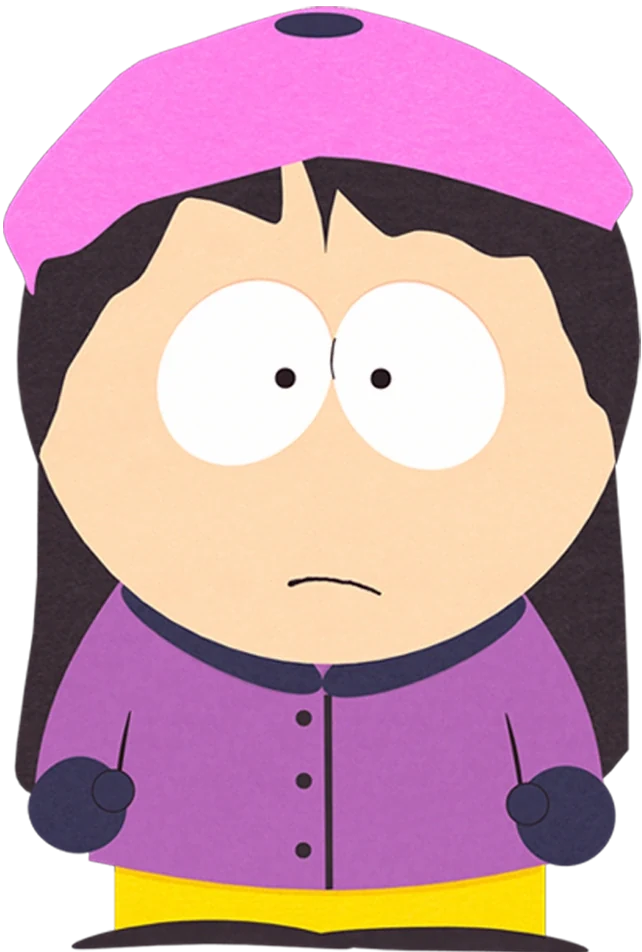
Wendy's long dark hair runs beside the purple jacket beneath a pink beret. A medium frame can show the relationship among all three. If a storyboard only needs a headshot, label it accordingly; the crop will not provide the same costume information as this complete reference.
Bebe Stevens
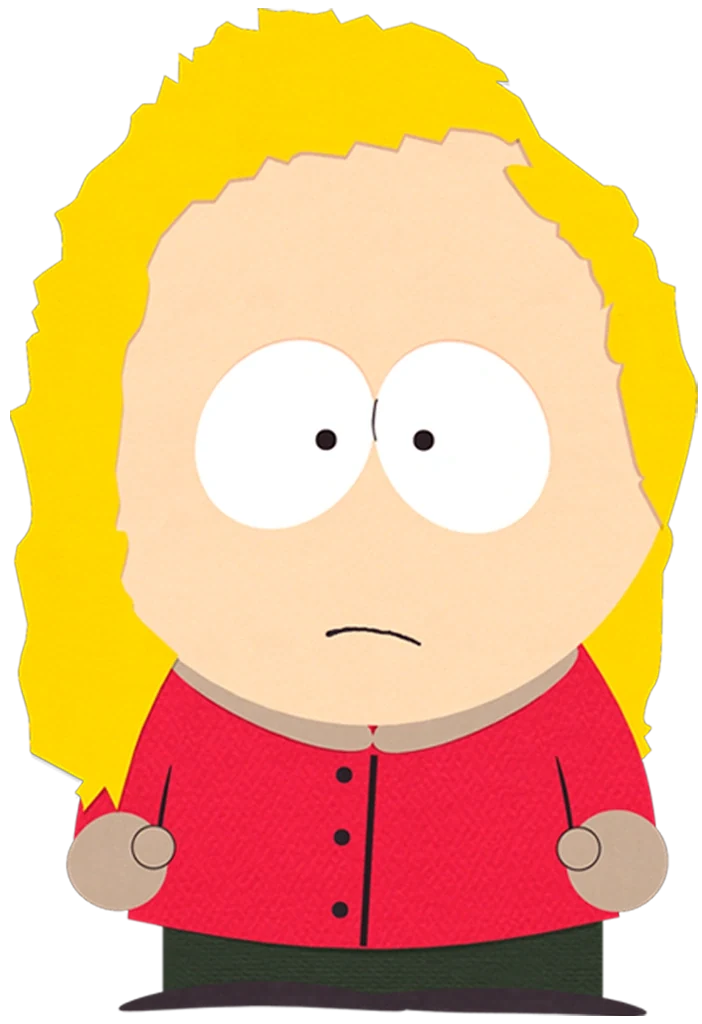
Bebe's blond hair spreads around the head and shoulders, creating a wider border than Wendy's. The red top remains a large lower area. Leave room at the sides of the frame when the hair shape is part of the scene's recognition cue, rather than cutting it to fit a fixed template.
Butters Stotch
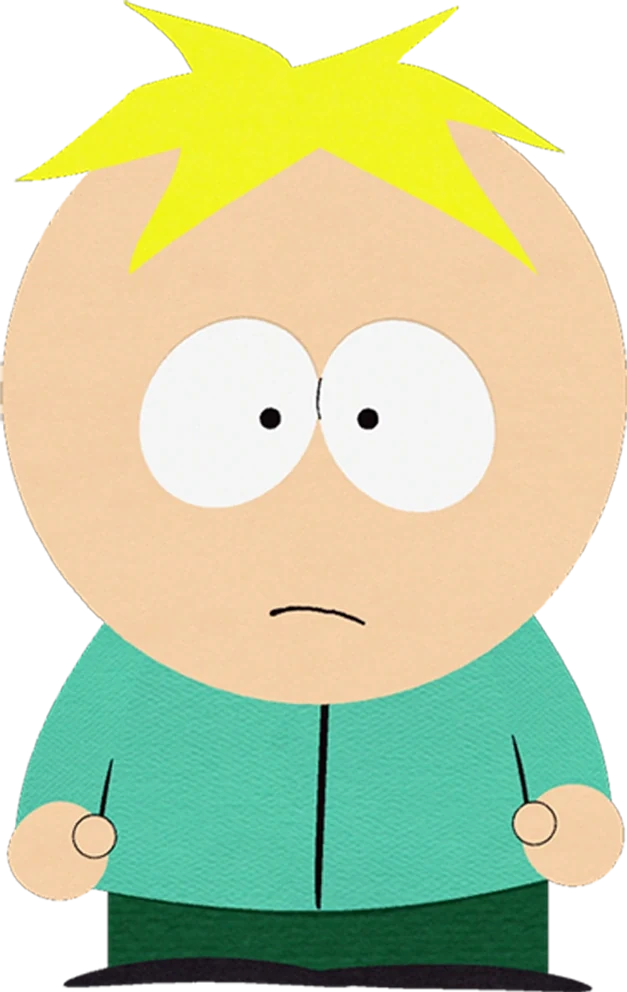
Butters' small blond tuft and turquoise shirt make a relatively uncluttered figure. A medium view can preserve both without much empty space. The image is useful for testing whether a storyboard's labels are doing too much work: his distinctive features should remain visible even when the caption is hidden.
Tweek Tweak
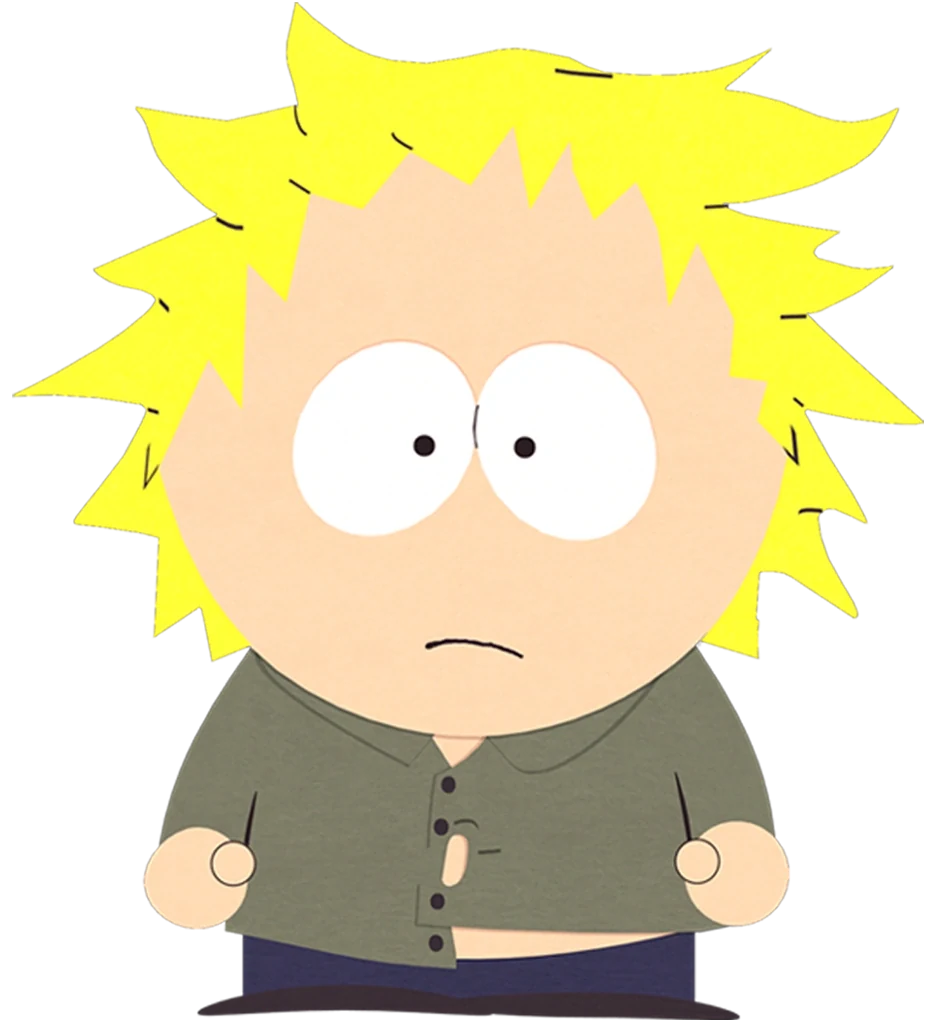
Tweek's outward-pointing hair reaches beyond the face's round shape. The olive shirt adds an uneven central line. A tight crop should not trim all the hair points, since they explain much of the outline. This is a framing observation, not a claim about movement in a particular shot.
Some subjects need the full figure
Jimmy Valmer
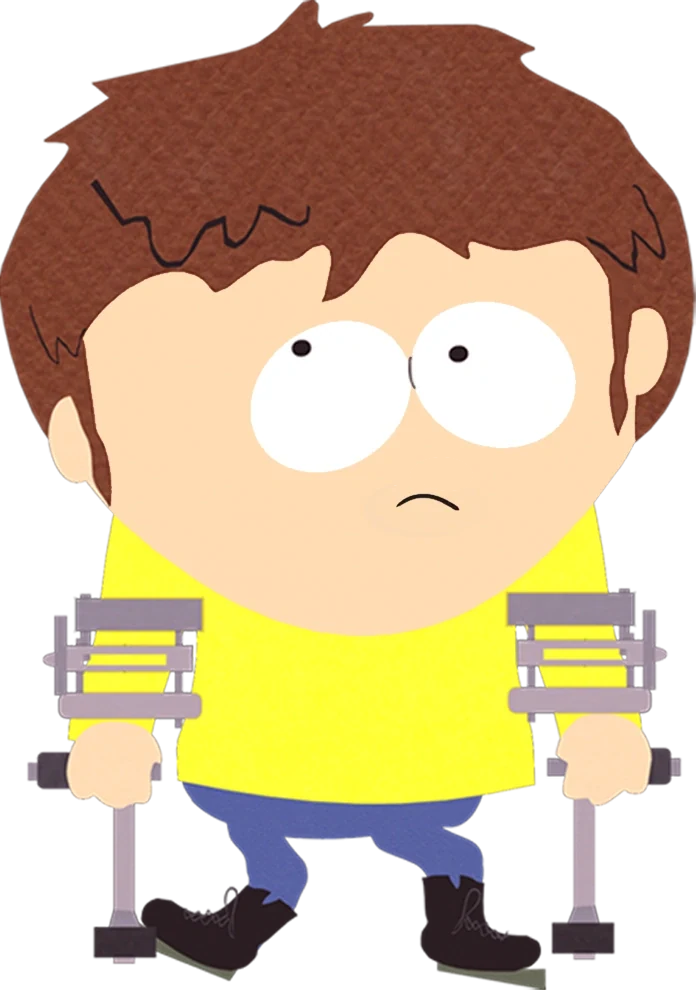
Jimmy's crutches lie on both sides of his yellow top and extend toward the ground. A full-body view communicates their relation to his posture. If an action involves moving across a frame, the reference should retain that arrangement instead of treating a face crop as sufficient planning information.
Timmy Burch
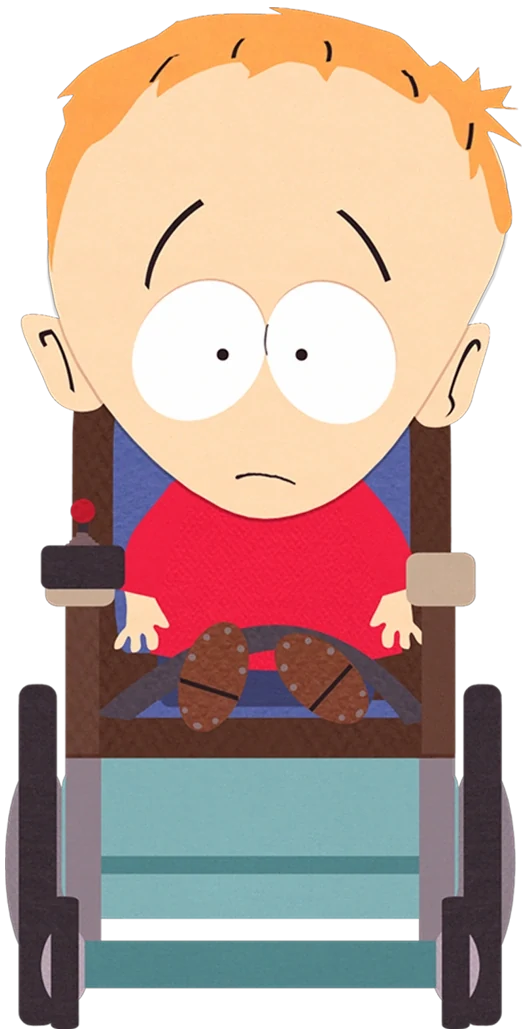
Timmy's seated position and wheelchair define the overall space he occupies. The red shirt is only one part of the image. A wide reference allows the wheels, foot area, and handles to remain visible, giving a storyboard more reliable information than an enlarged head-and-shoulders view.
Ike Broflovski
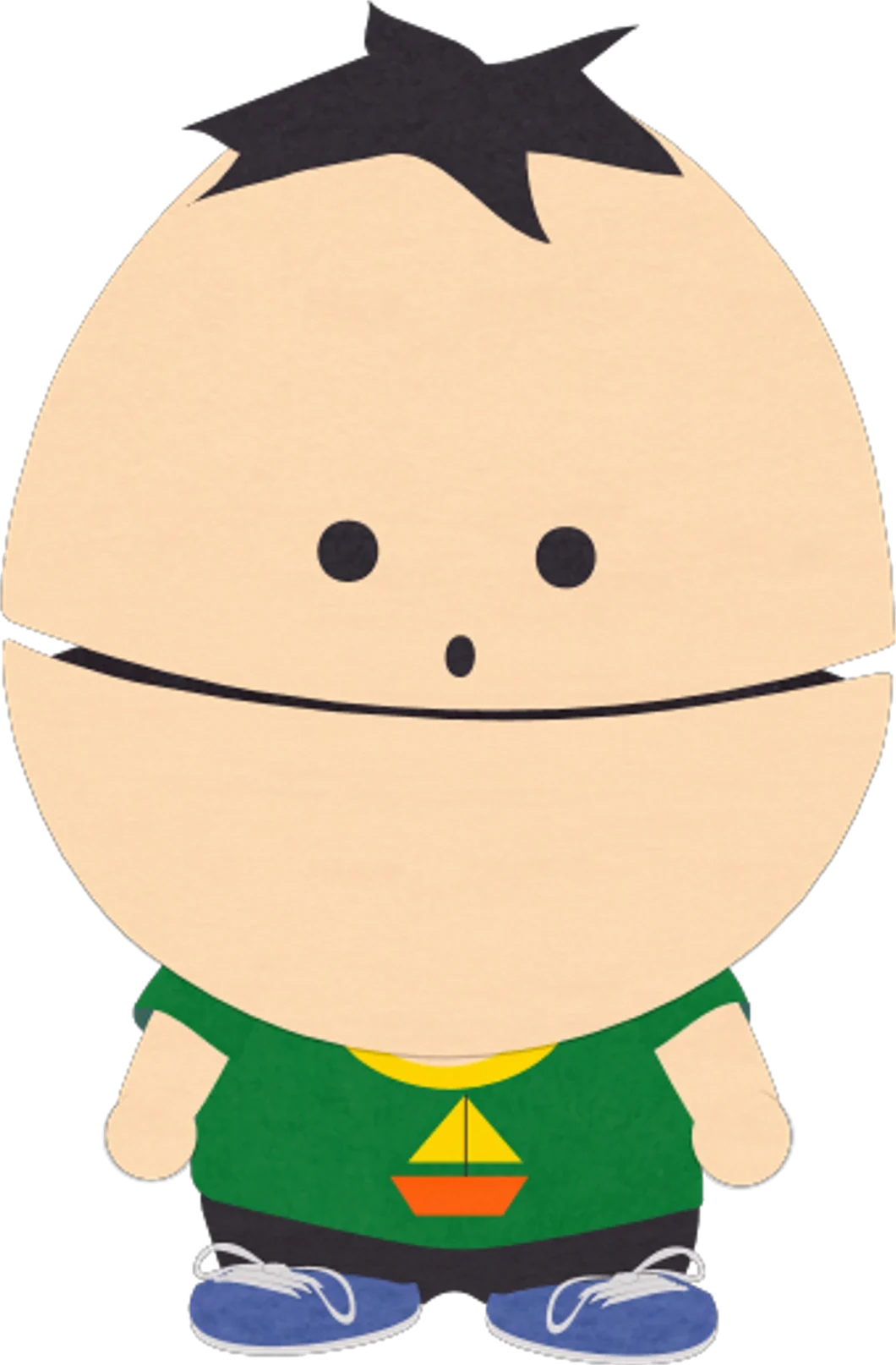
Ike's large head and small body create a proportion that differs from the older children. In a group frame, avoid enlarging his body to equal theirs. A reference should preserve the source relationship, with the dark hair tuft and separated mouth line still visible at the chosen scale.
Randy Marsh

Randy appears in a farmer costume with a brimmed hat, plaid shirt, and dark outer layer. The full image identifies the outfit variation; a face crop mainly identifies the man. Decide which information the storyboard needs, and name the costume if the planned scene depends on this reference.
Plan three shots with one purpose each
For an original cartoon scene, a simple three-shot plan can establish a figure, show an action, and reveal a response. Imagine a student in a rust-colored raincoat finding a lost library card. The first shot shows the figure at a doorway. The second brings the hand and card closer. The third returns to a readable face and body as the student notices the owner's name.
This is a scene proposal, not an observed generation result. Its value is the division of information: the first shot says where, the second says what, and the third explains the response. Keep the same coat, hairstyle, and prop between shots so viewers do not have to re-identify the subject every time.
A South Park character creator can be part of planning an original still reference, while a South Park character maker brief can describe the desired flat shapes and proportions. Video work requires additional decisions about motion and framing. Review actual outputs for continuity rather than assuming that repeating a character name will preserve every detail.
You can develop a scene idea from the homepage or read other visual-planning topics in the blog. The gallery supports creative observation; it does not establish which model will produce a particular character or action. Choose a character whose outline will remain clear in your chosen frame when you try South Park Character Creator.
Check the cut between two frames
Place two proposed storyboard frames beside one another and identify the information that connects them. The coat color, hat shape, and location of the main prop can help viewers understand that the second image continues the same moment. If all three change, the cut may suggest a new scene even when that was not your intention.
For the lost-library-card example, the first frame can show the card near the student's shoe, while the second includes the hand lifting it. The closer view should make the object clearer, not introduce a different object without explanation. Keep the direction of attention understandable as well: the student looks down before the camera moves toward the ground. A storyboard does not need elaborate artwork to establish these relationships. It needs enough visible information for someone else to follow the action in the same order you intended.
Distinguish Warcraft imagery from ordinary portraits
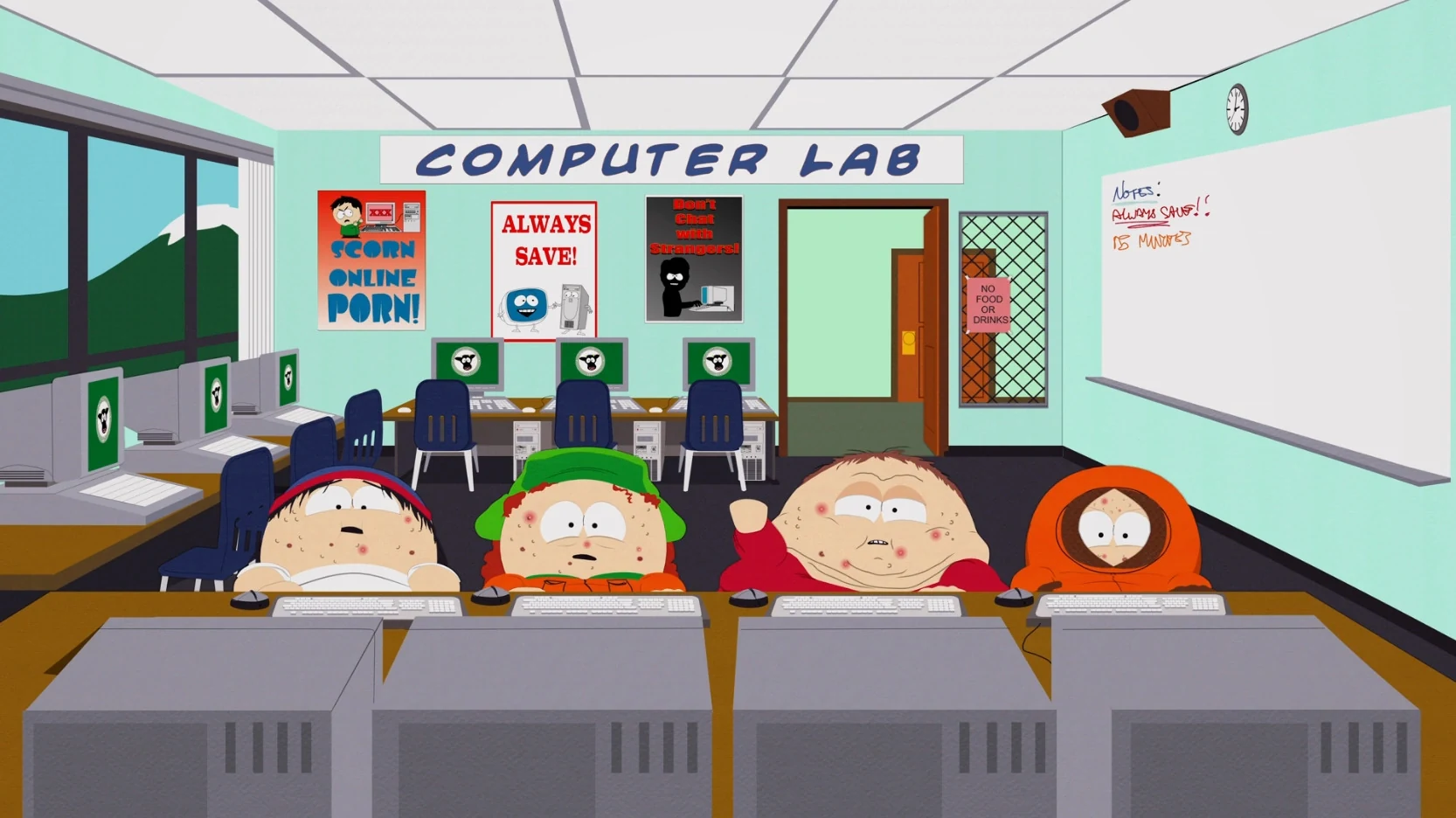
Make Love, Not Warcraft is the episode associated with South Park World of Warcraft. A powerful player repeatedly kills the boys' game characters, and Cartman leads a plan to build their strength. The story gives the familiar cast a particular gaming context.
The computer-lab frame shows how an ensemble image can establish that context at once. The room and screens explain the activity, while familiar clothing identifies the changed figures. Kyle wears green headwear, Kenny retains the orange hood, and Stan has the blue-and-red cap. Cartman appears in red without his usual hat.
Für ein South Park-Macher-Storyboard vergleiche die Informationen in diesem breiten Frame mit einem Standard-Cartman-South-Park-Porträt. Das Porträt isoliert Identität; der Ensemble-Frame verbindet Identität mit Setting und gemeinsamer Handlung. Wähle die Referenz, die die eigentliche Frage der Aufnahme beantwortet. Um eine neue Figur für ein Storyboard zu entwickeln, probiere den South Park Character Creator.